

The Journey Continues
 Comments (0)
Please join me as I broaden my reach – reclaim my name – reenergize my focus – and explore new horizons at LorraineKasyan.com
Comments (0)
Please join me as I broaden my reach – reclaim my name – reenergize my focus – and explore new horizons at LorraineKasyan.com
Wesley Fryer (@wfryer), Brad Ovenell-Carter (@Braddo) and others have spearheaded Sketchnoting over the years. As I explore this new medium I cannot help but think about the times when I did in fact attempt to get my students to take ‘proper notes’ and to stop doodling. I admit it. There were those students whose drawings seemed obsessive and counter productive to their learning. They seemed so very off topic and often controversial. Oh, how I wish that I had captured that teachable moment and helped them listen with intent and create images that connected the content to their understanding. I am now quietly obsessed with my own exploration of Sketchnoting and it makes me a novice and explorer all over again.
The subject of this post is one of my peers. When I took this job last October I had to slowly navigate the ropes of ten diverse schools, three distinct geographic districts within my county and two intensive education PEP schools (within other schools). Phew, I was daunted by the fact that my charges spanned sixth through thirteenth grades, some schools ‘tech’ savvy and others who struggled with the not enough blues. All these differences hold their own stories. Tonight I speak of one of the most welcoming Media Specialists within my area. He had held his role just a few months longer than I had and that gave us the gift of equal footing and extremely honest communication.
One of the first times Mr. Stone and I met I commented how very difficult it was to keep track of all the requests and tasks that crossed my desk. The new steps to software installation and connections for hardware. Java updates, grade book woes, iPad apps, and overhead projectors. I was filling up legal pads faster than I could replace them and often did not get to peruse the notes to file appropriately or type a response to the teacher in need. (There were many doodles and pictures on these pads.) Wayne showed me his moleskine pad. It was no bigger than 2.5 by 4 inches. He said, “This is what I do. Every time someone asks me for something or I have to follow up on technology I write it in here. I just cross things off as I go and when the book fills up I start a new one.” His notepads looked just like the ones I took with me to India for ease of travel and accessibility. They fit in his back pocket. The connection I felt when he offered me one of his extras filled me with gratitude. I did not take him up on it but started looking for those tattered moleskine notebooks of my own.
So, the post wraps itself up! Wayne helped me with my first Sketchnoting adaptation before I even knew it. His doodles matched mine. There was information in that notepad but symbols, and arrows, and faces, and dots were there too – all connecting his own learning with the tasks ahead of him. One other type of making meaning, but one that resonated with me. Thank you Wayne, and thank you Wesley (@wfryer), Sylvia (@sylviaduckworth), Erin (@KleinErin), Sherrill (@sherrillknezel), Stefanie (@stefanieBnc), and most of all Rachel Smith (@ninmah) for inspiring me to overcome my novice perfectionism. Sketchnoting is in my blood; I am using paper and pen as well as many iPad apps as I explore. I will take it one step at a time illuminating the connections of my new learning journey.
Now, where is that notepad?
April, 21 addition: Enjoy this student artifact, thank you for your kind words.
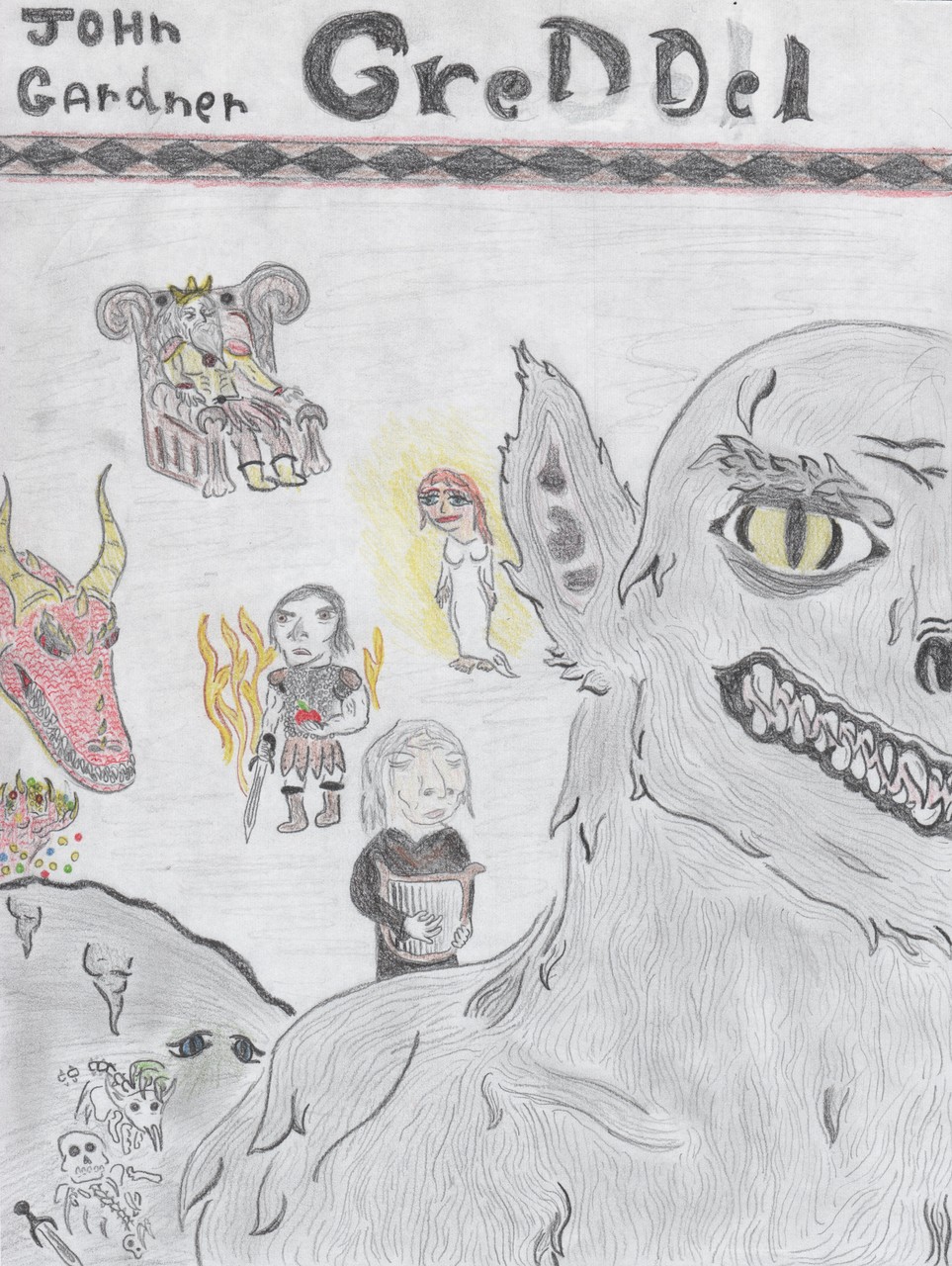
Isaac made meaning by sketching plot, themes, characters and conflict.
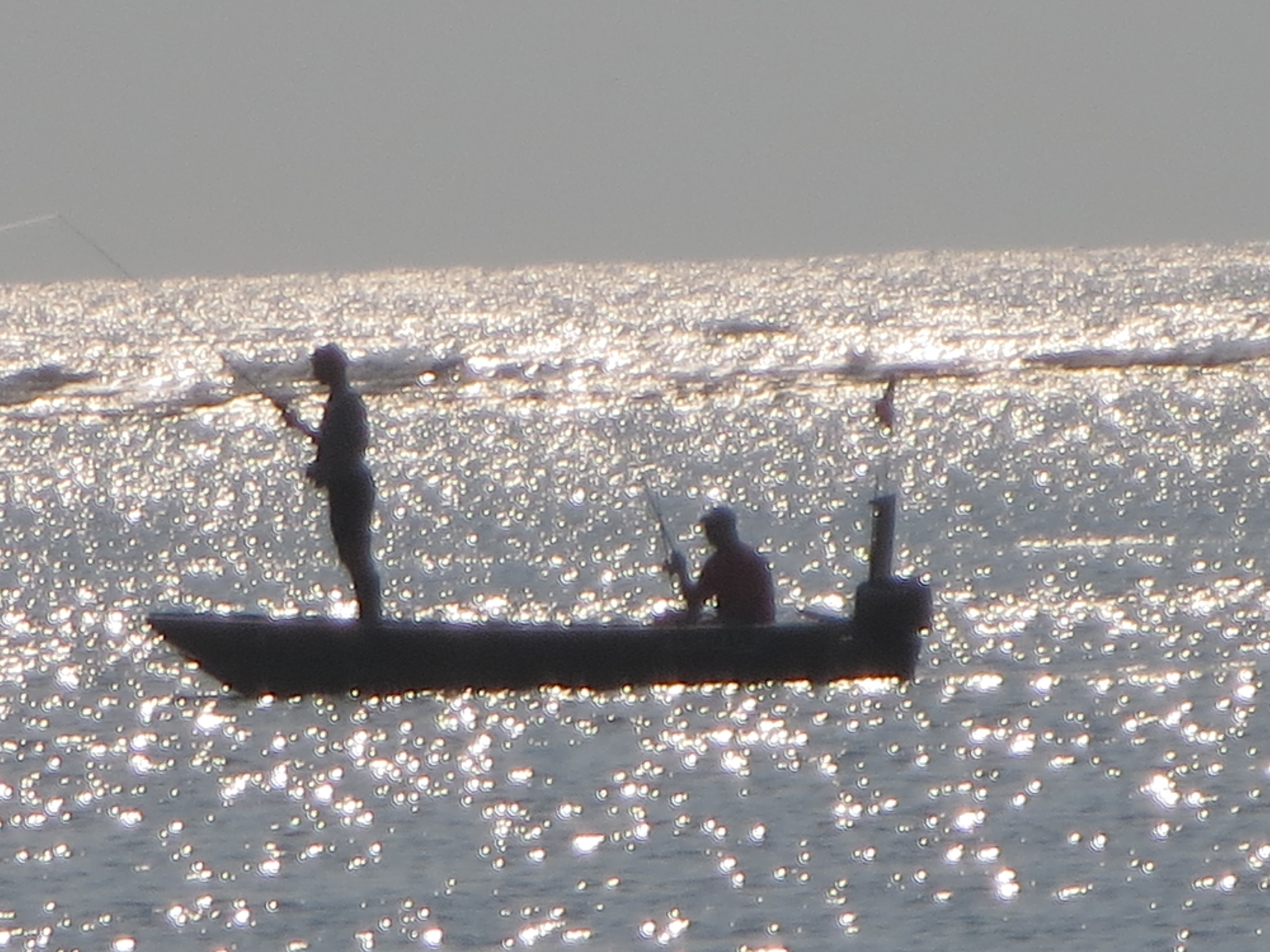
Taking a hint from the Island
Writing a blog that sustains the author is one endeavor – writing one that engages others is quite another story. This year, I hope to do both as I turn this journey from teaching to demonstrating learning through technology. That is not exactly the shift, but a new position and redirection of my professional path requires a statement. The last year has held many profound experiences both personal and professional. Traveling to India stands as a highlight but the loss of another dear friend and two canine companions causes me to pause as I look towards the new school year beginning in just a few days. How will I live as a positive change agent in the classrooms and schools that I serve? How can this new role as ‘Digital Technology Facilitator’ be one that inspires students and teachers to embrace this exciting age of creativity while also encouraging a global awareness of compassion and problem solving?
One step at a time – that’s how! I will meet the needs with small tools and build broader projects as we nurture trust. Learning green screen technology on the iPad sent me looking on the web for tips and tricks. This statement, “One way to depict the cycle of education is that it moves between the development of learning and the subsequent expression of understanding” (Sam Gilksman) really hit home. There is no doubt that education cycles between theories, policies, standards, and assessments. But it also cycles through the tools that allow our students to express what they know. Digital technology delivers a ripe landscape for creative expression. Keeping up with the tools is almost as important as continuing to understand the students who will use them. These children of smartphones, tablets, global unrest, and extreme climate change. In them lie our clues. Clues to how they learn and what they need from us.
Charting a new course and committing to sharing it here. One day at a time.
There are so many opportunities to say thank you and to watch another person change the trajectory of someone else’s life. Folks in the medical profession do that often by healing an illness or repairing a limb. Helping a loved one through a major surgery recently made me think of the many ways we get to leave a legacy. How very grateful I am for talented physicians who specialize in quirky muscles, tendons, and bones that do not behave the way they are supposed to. Giving someone back the use of his or her arm and shoulder – wow, that is something to be thankful for.
Readjusting to life after my visit to India continues to surprise me. There is a difference in the way I see and feel my surroundings. A deeper hue or reflected vision. Everything feels crisper visually. The subtleties of birdsong and shadow, sunlight and wind, feel like tender gifts. My senses are alive in a new way and so are my connections to people. India in all her humanity and chaos has created a shift in me that makes me want to pay attention.
This new view makes me eager to get back into my classroom and try once again to do a better job this year than ever before. To create new lessons, find great literary companion pieces, show my students their power and connect them to the world around them – both here in Western NC and across the globe in Mumbai or Delhi. The path ahead energizes me. The policy changes, new student tests, budget cuts and adverse legislation, teacher measurement tools, and financial trimming create a hum in the background of my mind, but they do not overtake my senses. I see smiling faces, hopeful new students, classes coming together as a family, surprise leaders, and thoughtful analysis that changes minds and spurs hope awaiting me.
My legacy. I am mindful that every child matters. Each set of eyes is related to a family with hopes, dreams, challenges, and frustrations. Each set of eyes belongs to caregivers who love them, who toil and work diligently to support and nurture them. And just in case I encounter one who is not that lucky, I am honored to be that set of eyes.
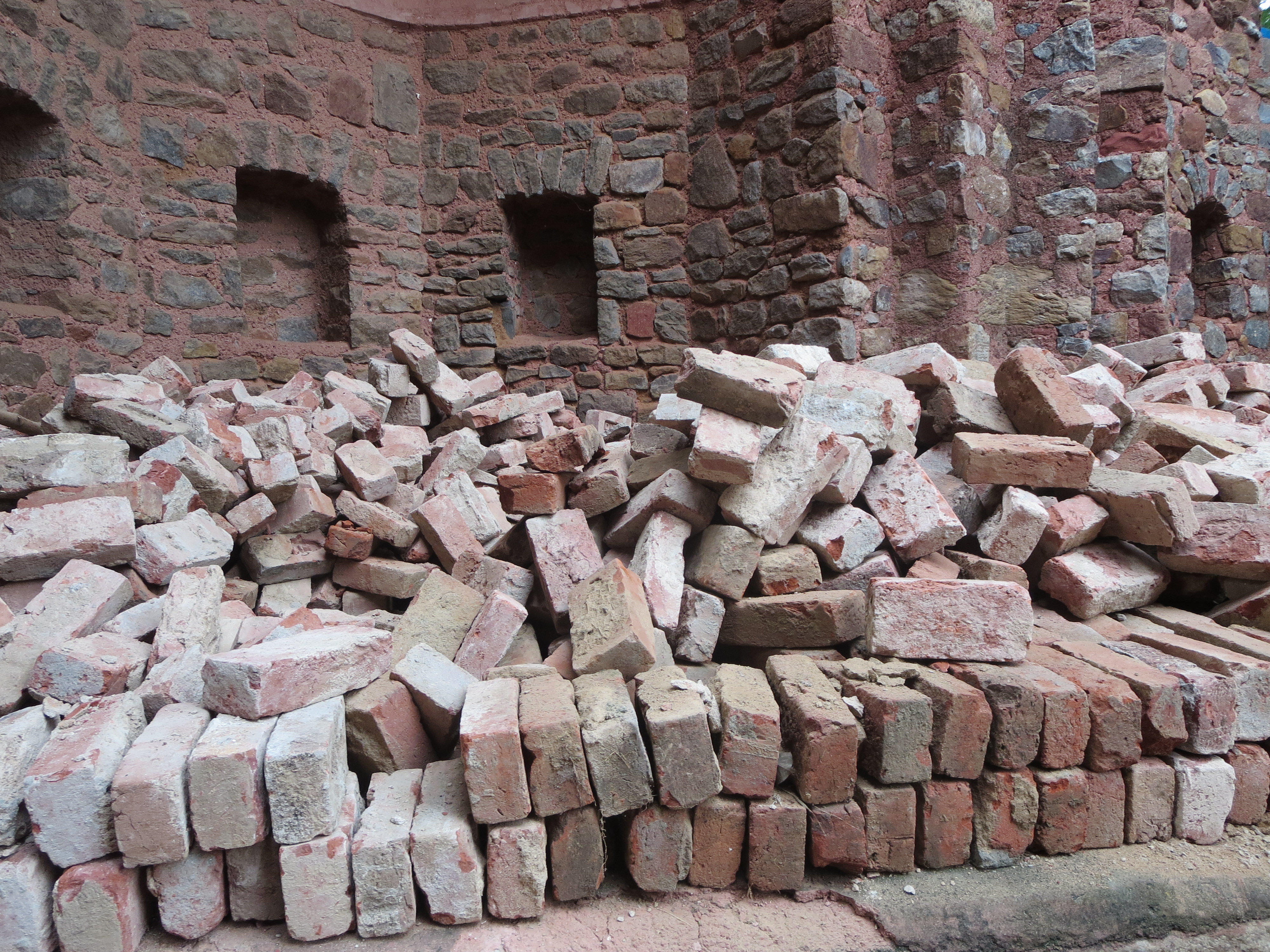
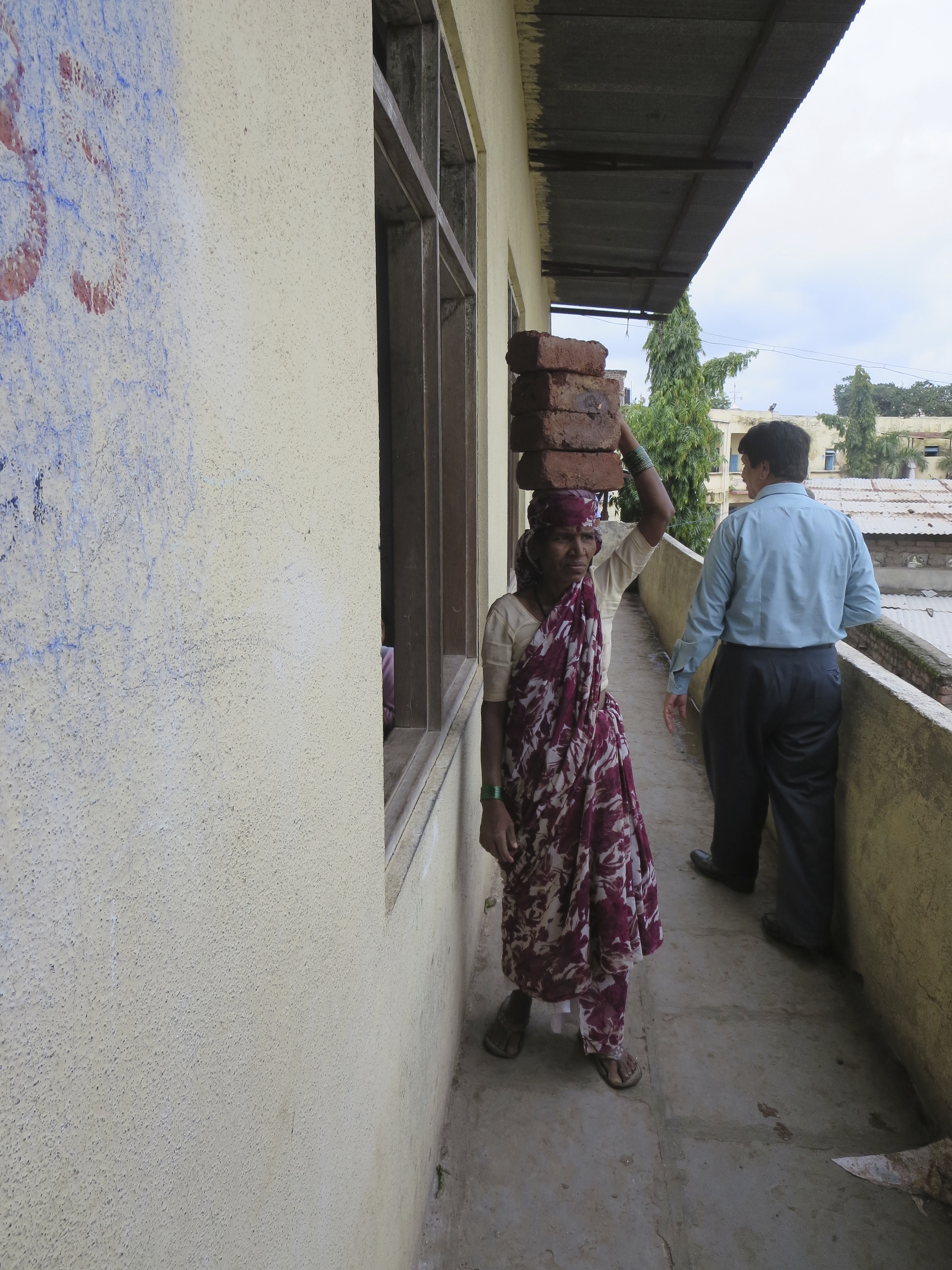
One theme that ran steadily throughout my trip to India was bricks – stones, tiles, bricks, and sand. We saw so much building going on, so much construction debris and piles of supplies that it gave me a constant reminder that India is both on the move and ancient at the same time. That it is re-building the aging infrastructure, brick-by-brick, while also raising up massive new high rises to house the population growth and new business. I took pictures of the stones as they started to permeate my vision. Workers piling bricks up high on their heads to pass to others, all seemingly insignificant in pace yet as the processions never stopped, the progress was steady.
We visited many forts, tombs, temples, and yes, The Taj Mahal. Our guides proudly spoke of the history and use of each building and again, I was mesmerized by the restoration efforts that were ongoing and by the admission that even The Taj was a Brick and Mortar structure covered by a veneer of marble.
Brick and Mortar – the foundation of many civilizations. The metaphor to education cannot be ignored. What is the Brick and Mortar of education policy in the United States? How can it change, be gutted, and then rebuilt without careful selection of construction material? How can my state, North Carolina, survive the current onslaught of legislators dismantling the Brick and Mortar of our schools with policies that reverse positive growth in education, take funding away from schools, and push privatization instead of support for public schools and their teachers? Our best and brightest teachers cannot afford to stay in teaching. Affluent parents have now been given a green light to move their children to schools that do not bear the same burdens.
Thirty-five talented, passionate educators just returned from a life-altering trip to India where we visited schools and businesses, and witnessed first hand the damage done to children when public education does not serve with fidelity. We heard time and time again that no middle class parents would think of sending their children to a public school. Yet the vast majority of Indian children, especially in the villages, have only the public school to hope for. Many of the schools did not have lights or electricity in their classrooms, they are overcrowded, lack supplies, and have teachers who are so overworked that the best they can do is offer rote-learning in shifts. India is sharing her lessons with us – are we ready to listen?
The Door Step School
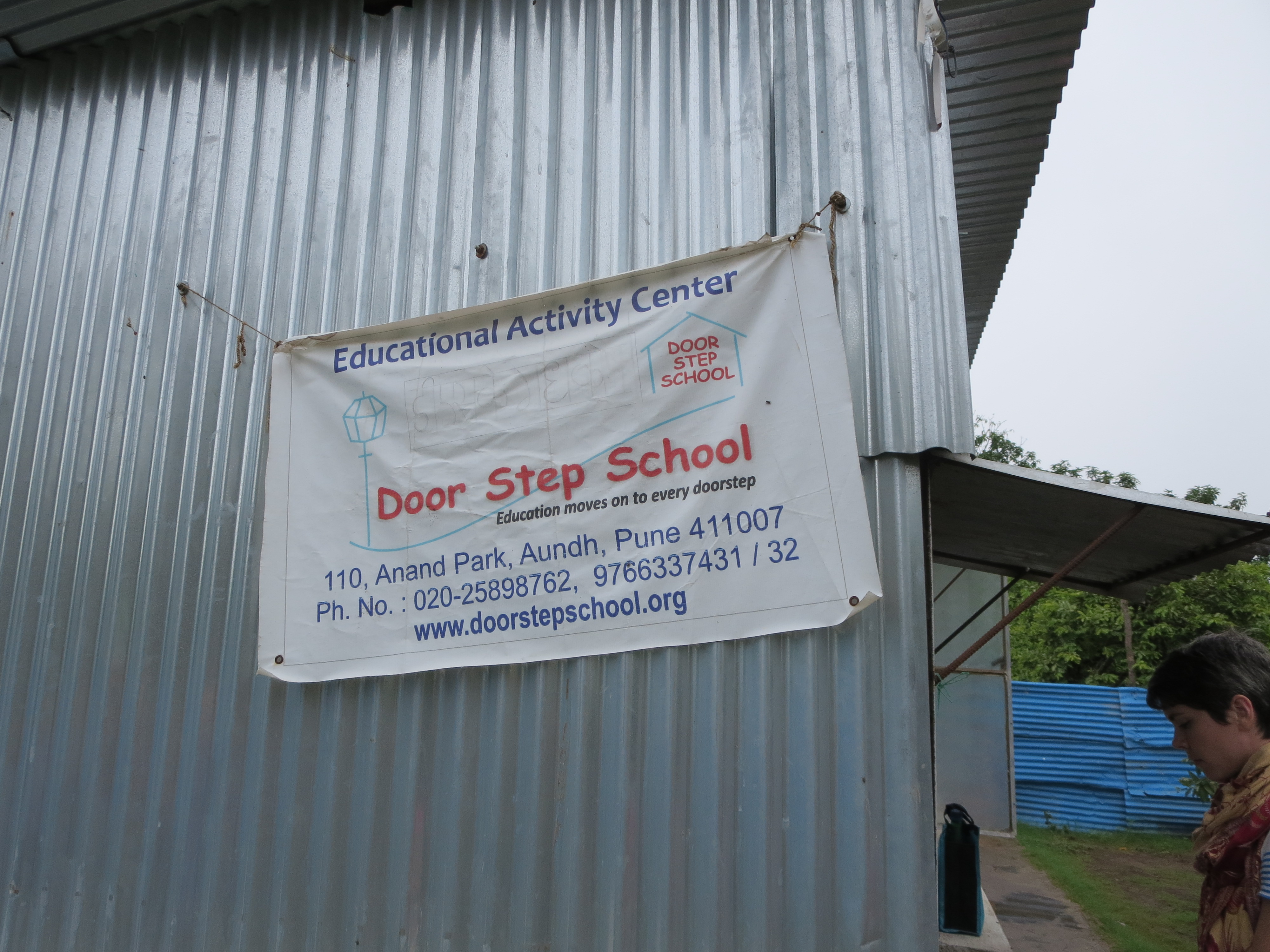
Let me explain this program in pictures. There is construction going on all over India. The workers migrate to where the building is taking place. Their children go with them and would normally be largely unsupervised and definitely out of school. By definition this was astonishing, but I likened it to the migrant workers at home, those that follow the crops and transfer in and out of schools. These Indian students do not register for the public schools. There is no way to get there or to get back and no way to monitor or follow the workers. Door Step School saw the problem and came up with a solution. In situations where there is a camp set up near the construction site , Door Step follows suit, builds a tin shed, and locates the children. Teachers are trained, logs are created to follow the students, and skills and attendance are taken daily. The teachers were very proud of their system – now, if the construction finishes and the family moves on, Door Step can transfer the records to another school that will start up where needed. This was not the most meager set up that we have seen but it is close. Here we go…
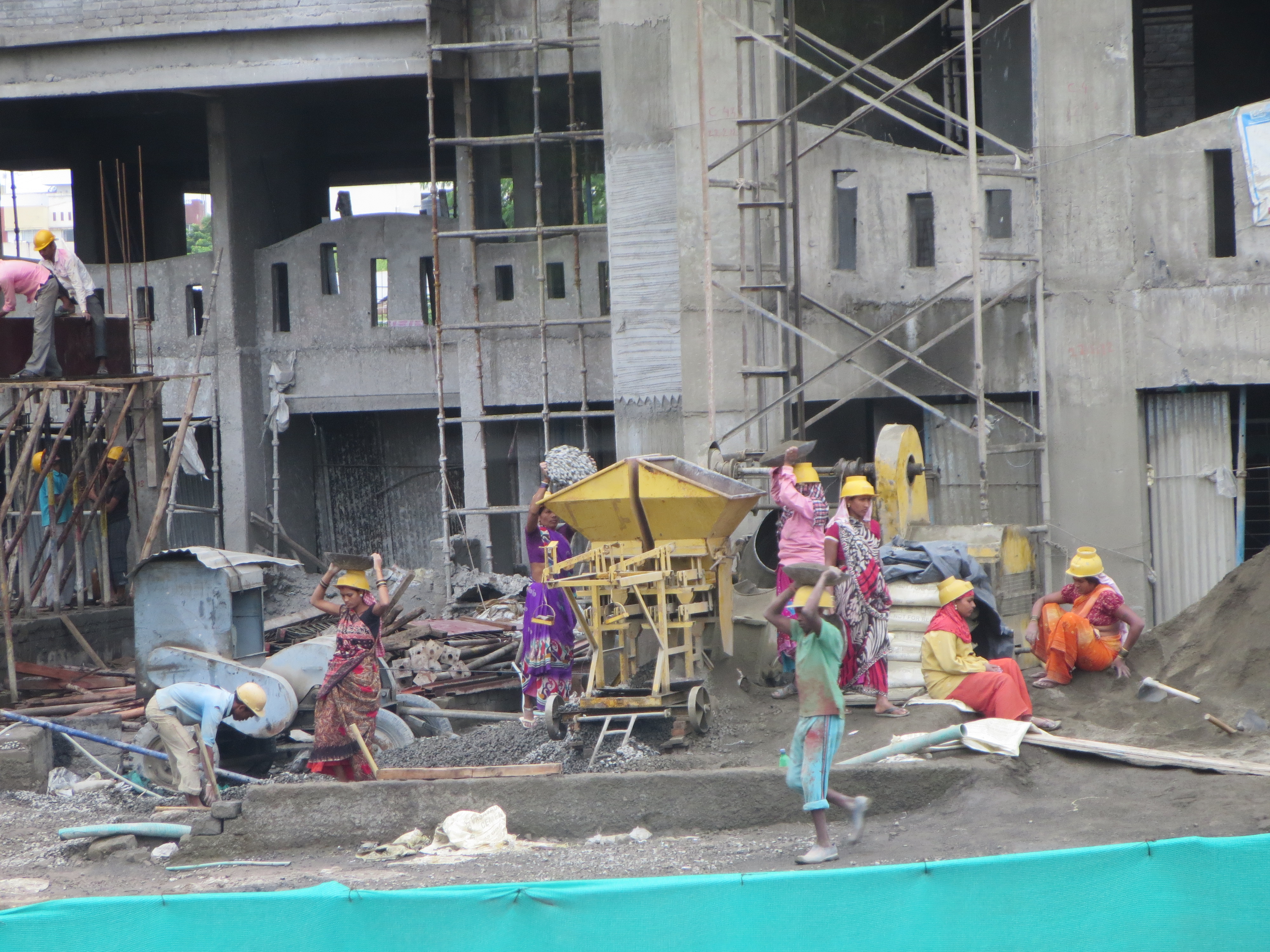 The families at work on a luxury high rise.
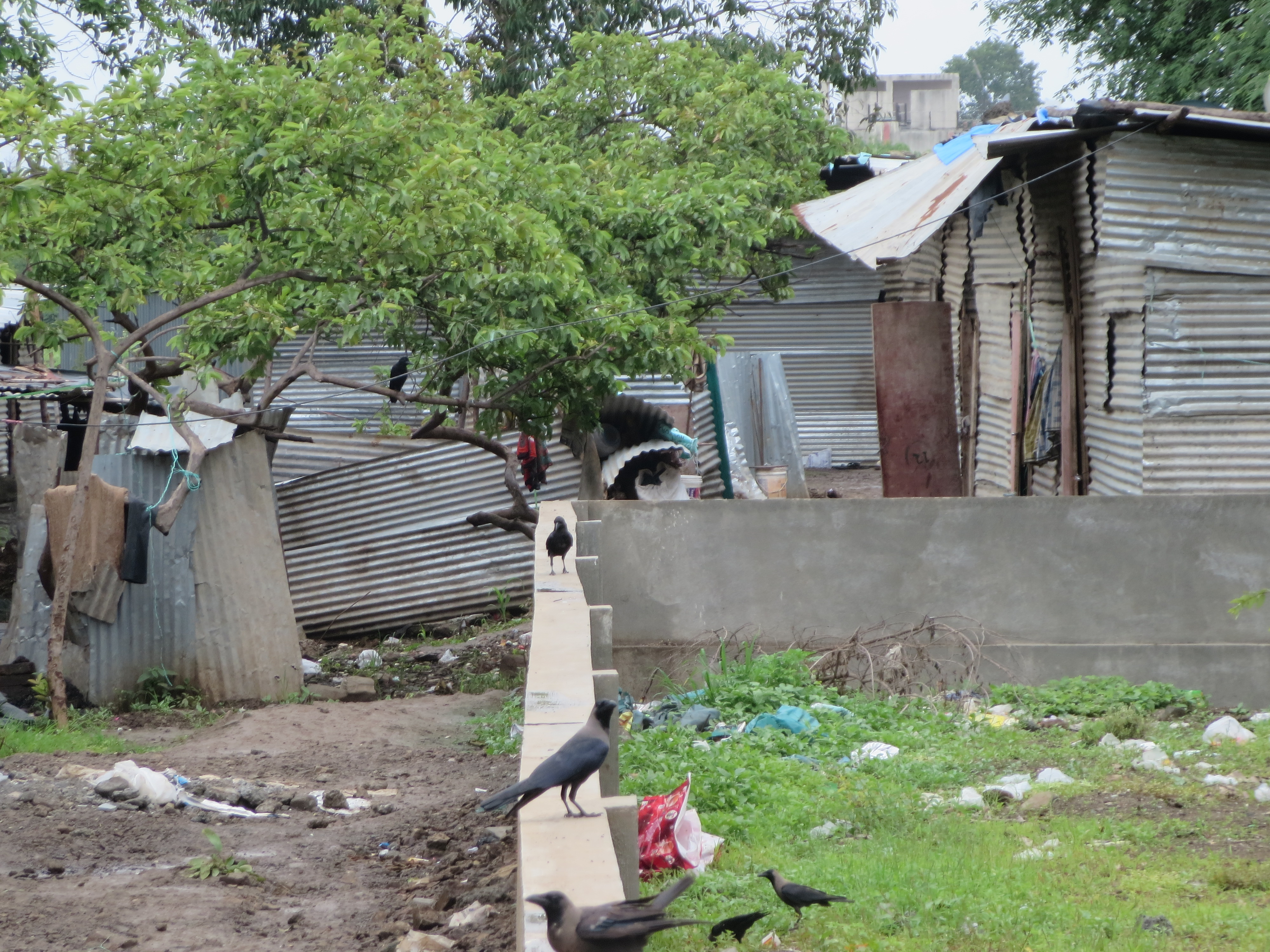 This is the village that has sprouted up to house the families.
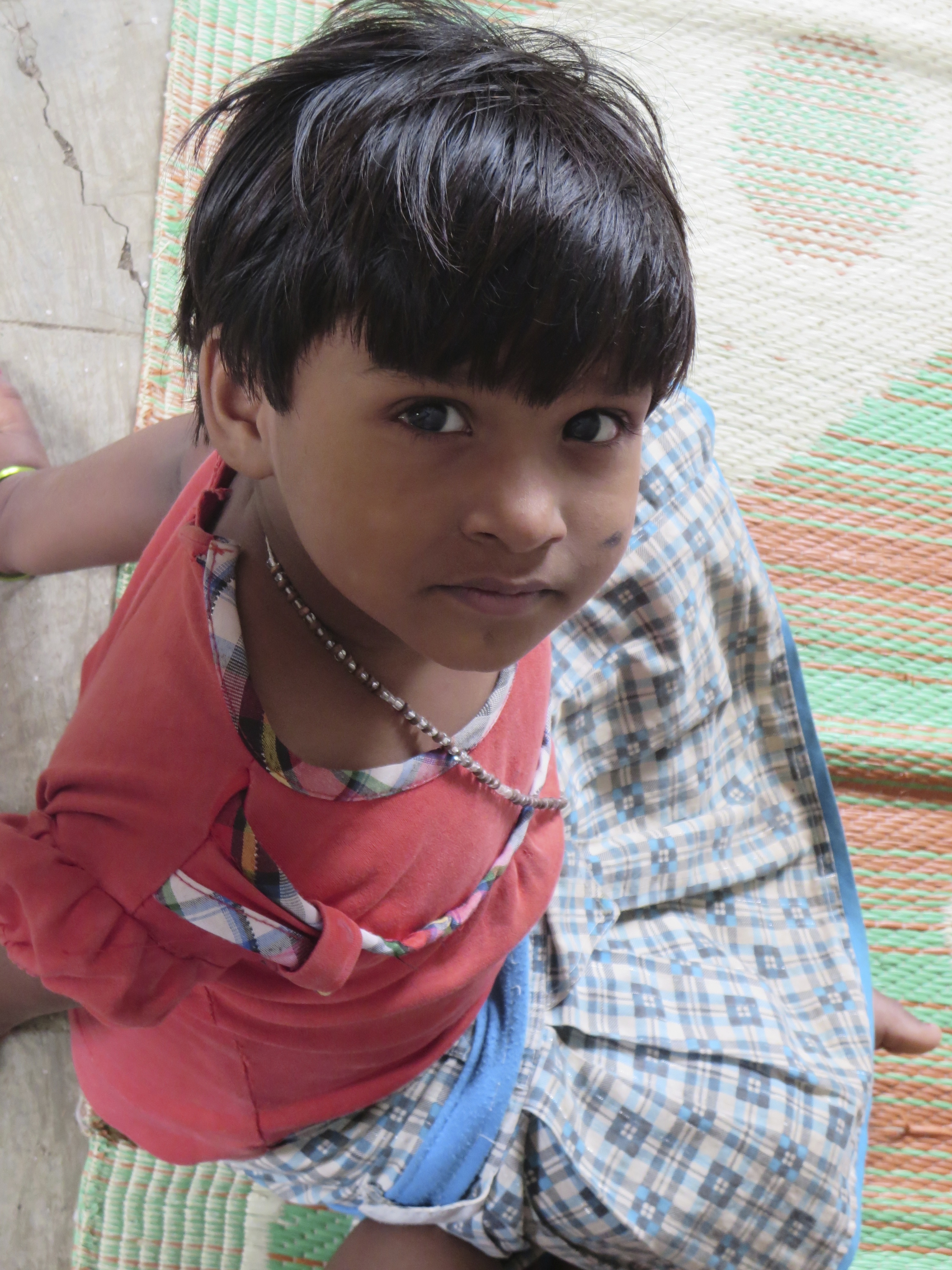
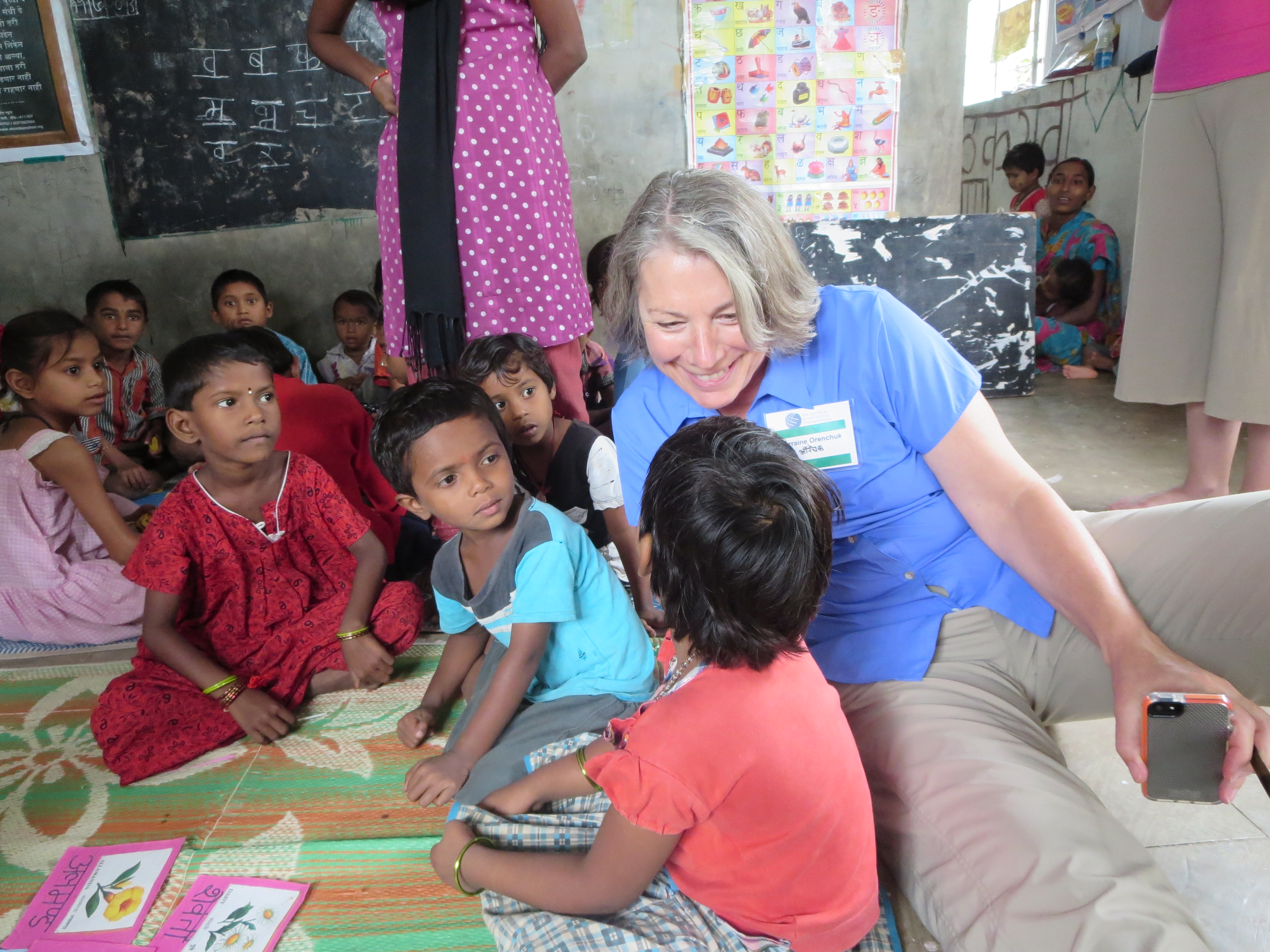 We could not resist sharing a moment with the students. Most were shy, but this little one had an impish grin that lit up the room.
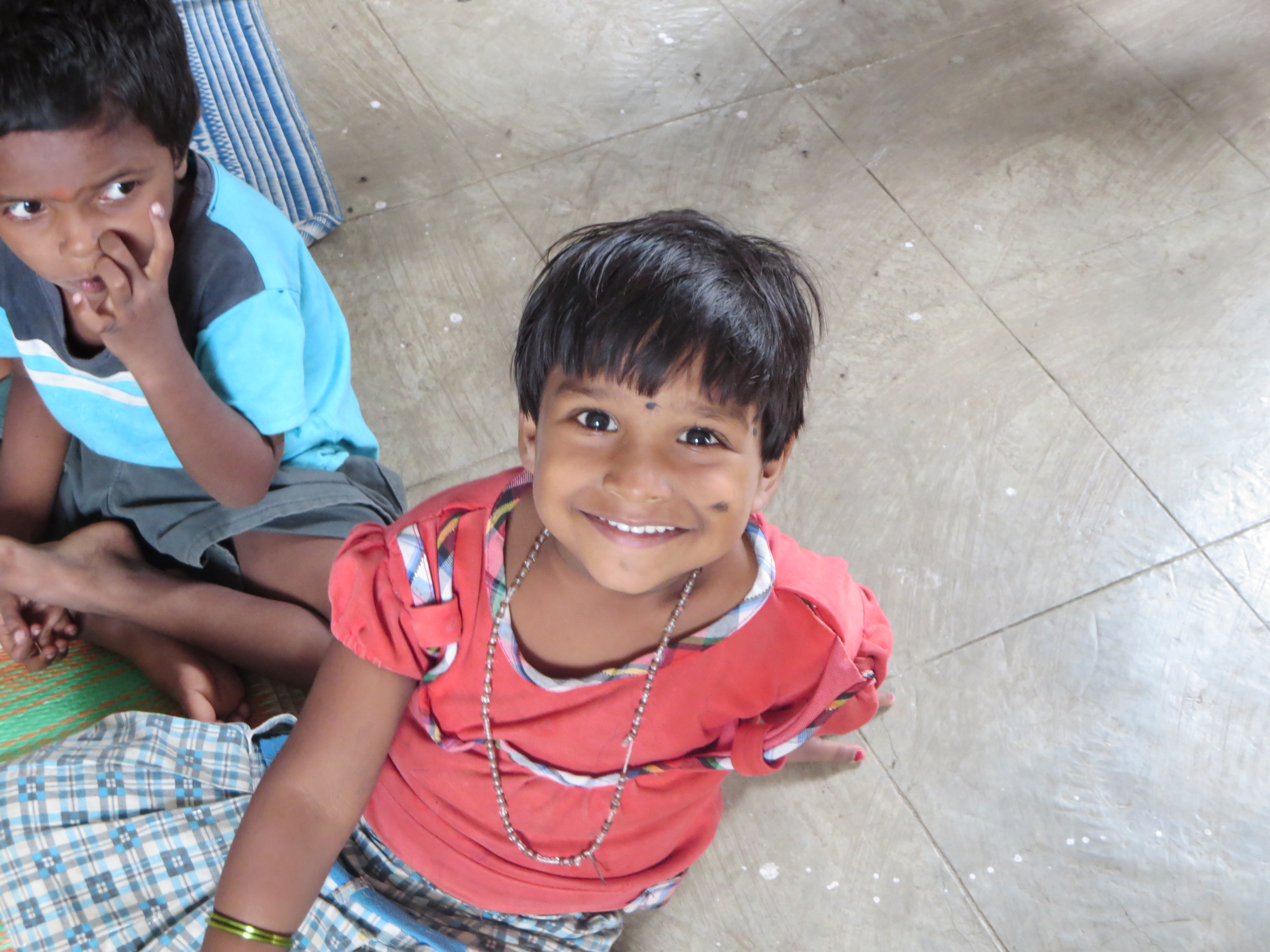 See what I mean?
I have been trying to upload a photo of the families as they collected their little ones for lunch – it is not going to happen tonight. We were overwhelmed by the simplicity and genuine grace in their collection. This is home to many tender families.
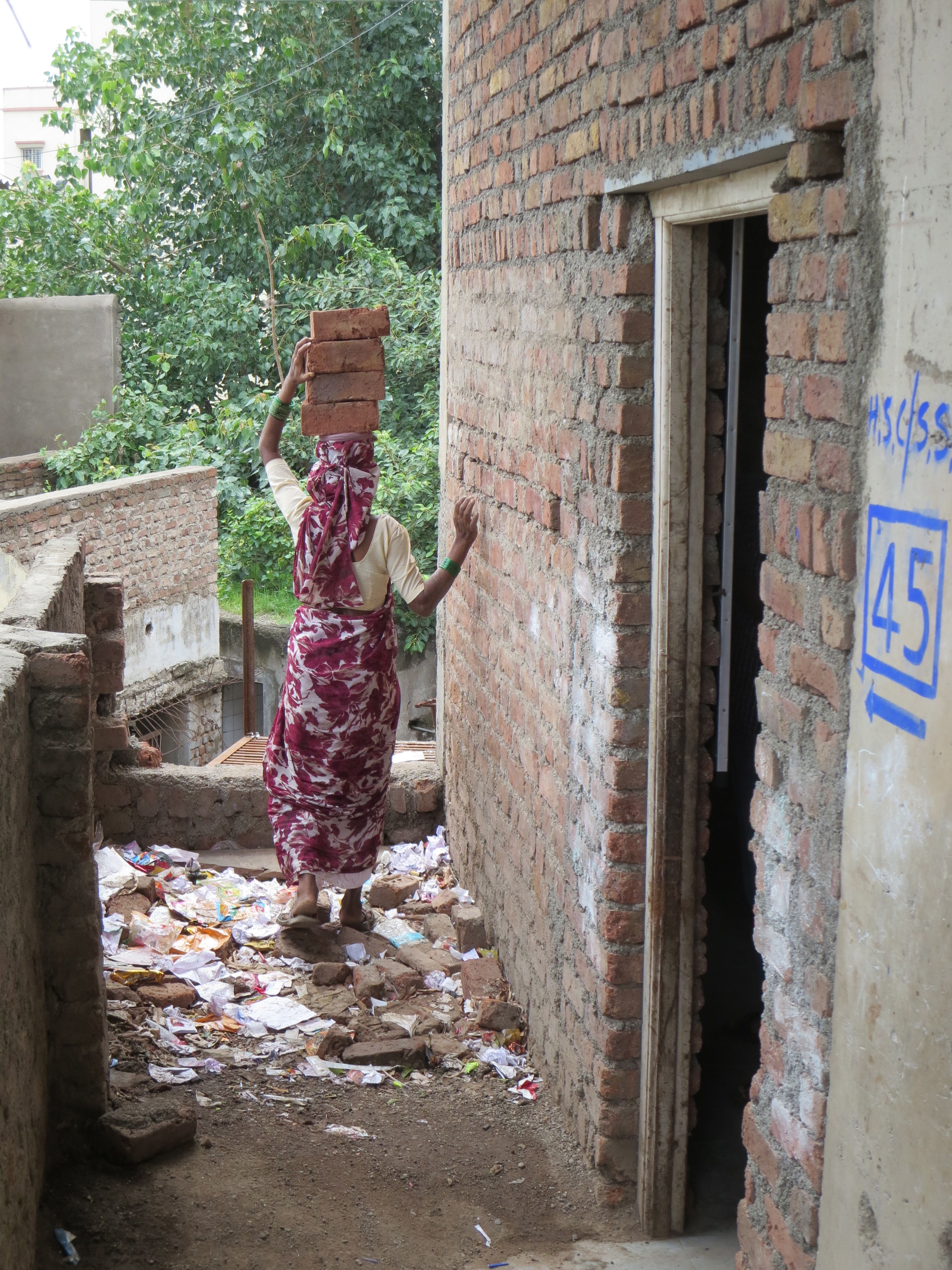
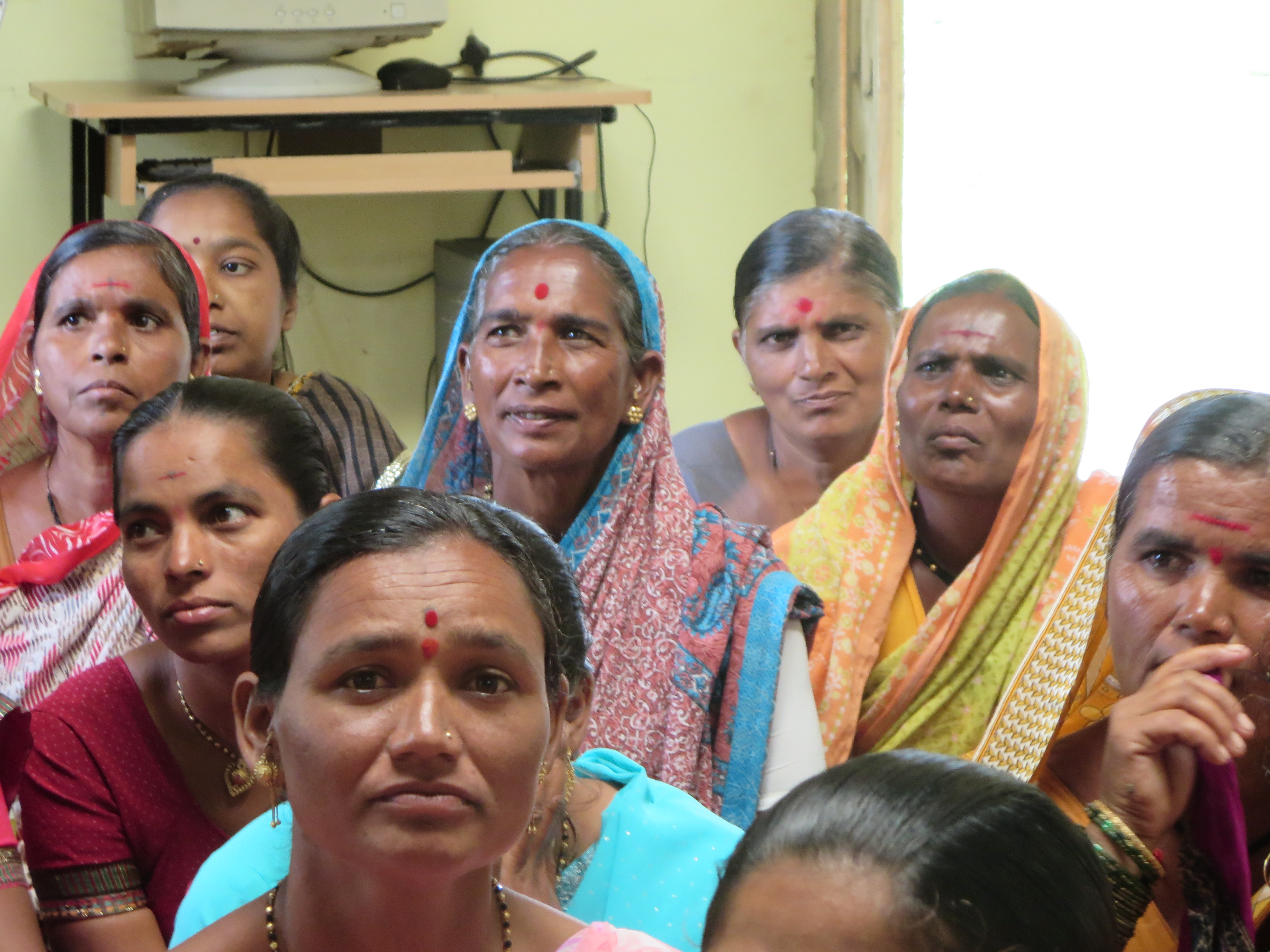
Somehow the days have blended into one fabulous chain of humanity moving our little tribe along on wonder. Friday we traveled a few hours out of town to visit the rural village Nimgaon Bhogi where we met a women’s self-help group, facilitated a sports day, presented lessons to our perspective grades, and shared a traditional lunch with a village family. Any one of these would be perspective changing.
In the evening we met our host families and traveled to their homes. Three other delegates joined me as Mrs. Shalinia Pawar and her driver collected us. What fun! We were going to travel 78 kilometers in a vintage ambulance. Our sense of adventure was a bit stilted by fatigue, but the smile of our hostess eased the way. Dr. and Mrs. Pawar live on a mission hospital campus. We arrived to find out that we were to be guests of honor at a special meeting of the Daund Rotary Club. We were introduced, awarded trophies, asked to give a brief speech, and then answered questions for about an hour and a half.
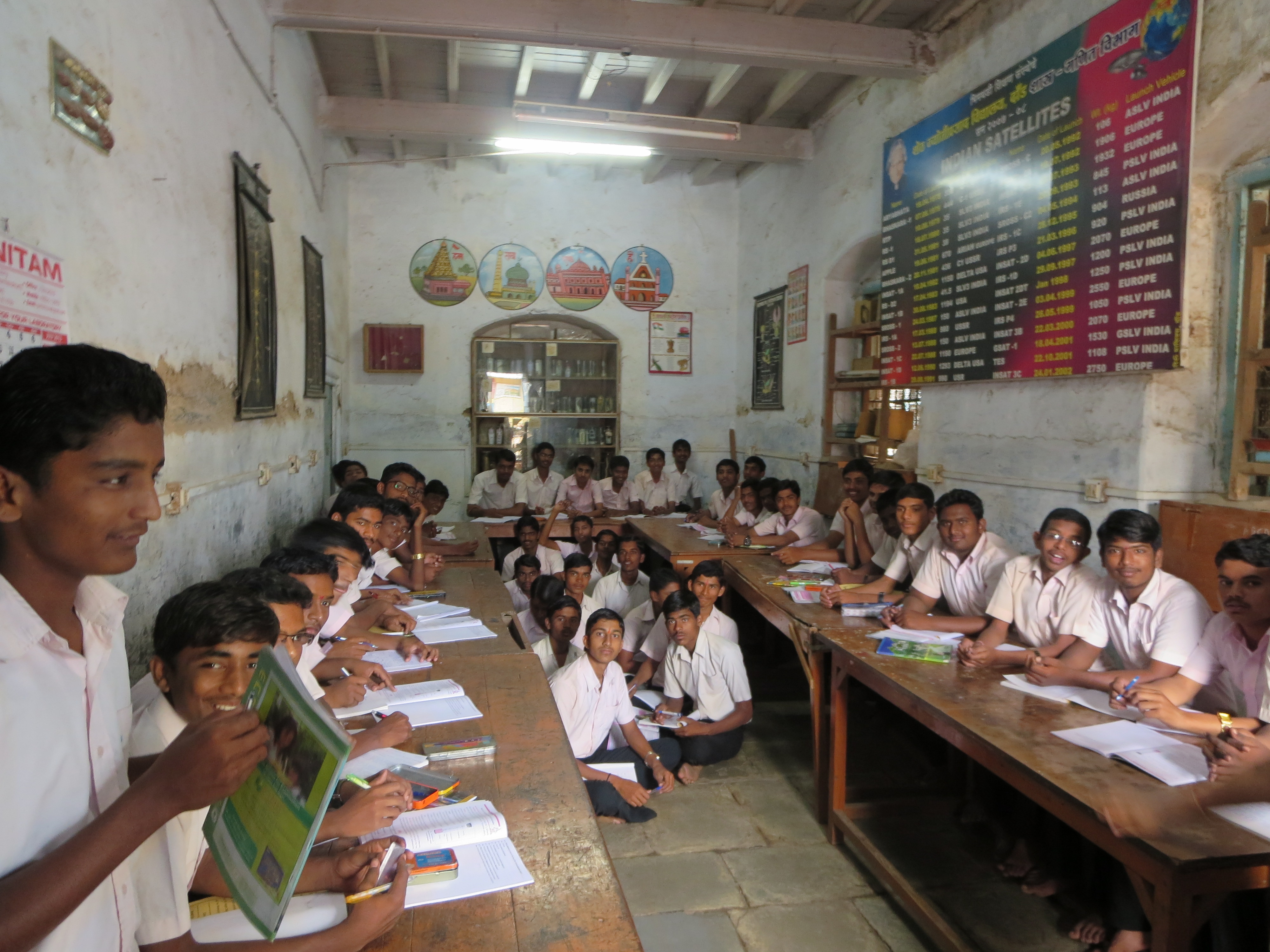
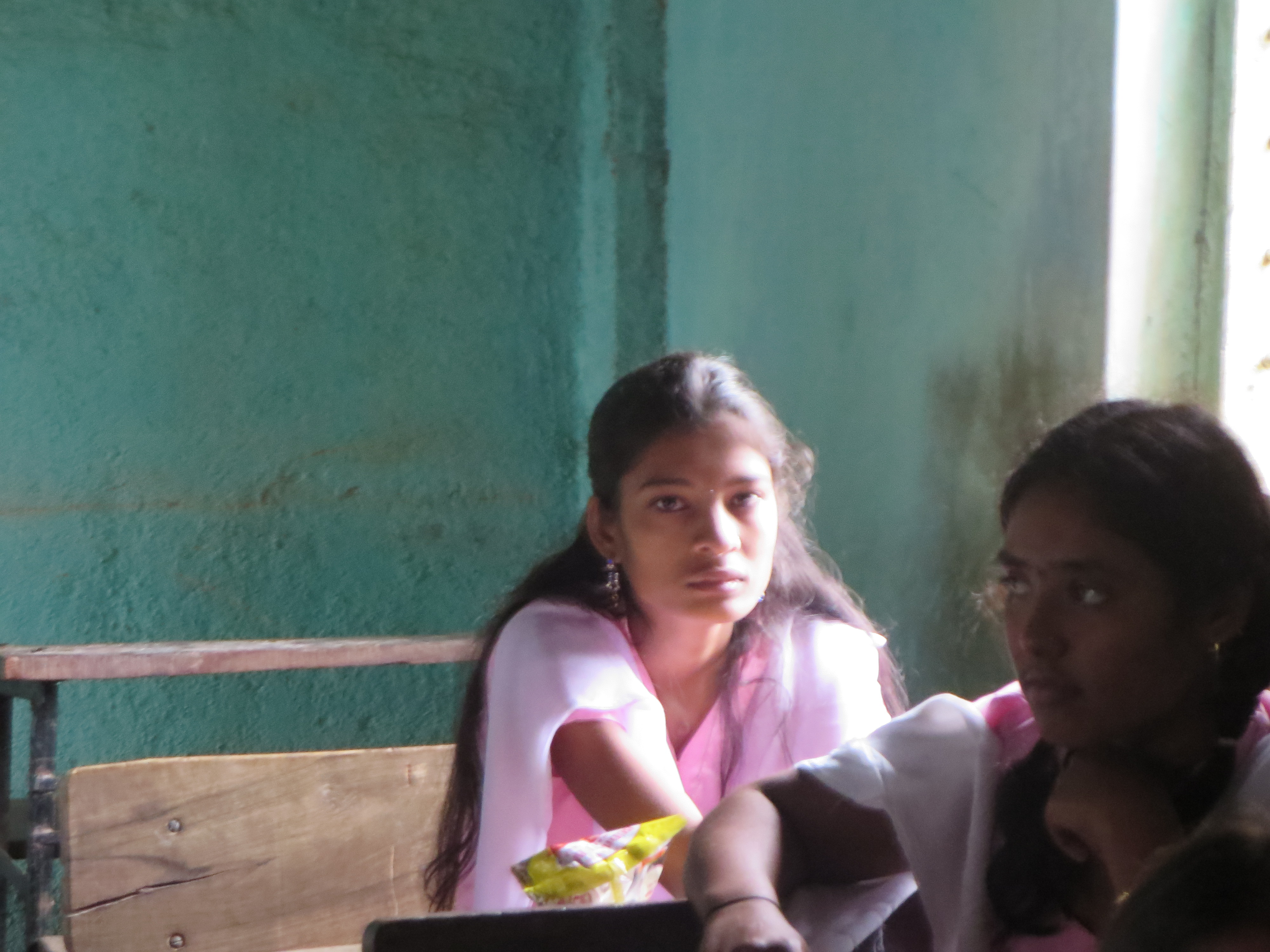
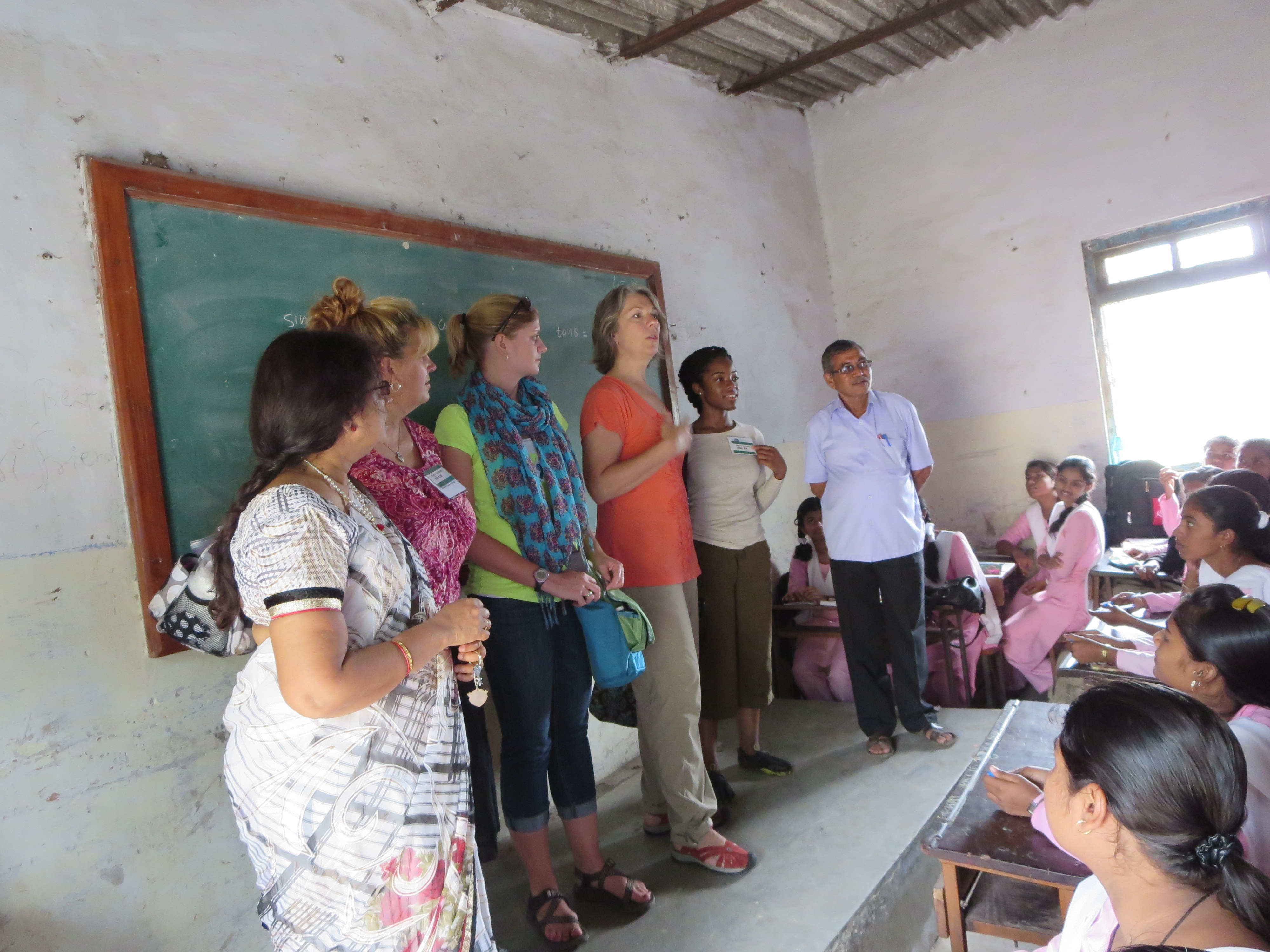
Saturday dawned and the cultural experience of shopping and site seeing did not dawn with it. The Powars had arranged for us to visit three schools, an orphanage, a women’s self-help group, and the slums of Daund. The day was filled with humbling and inspiring experiences. The schools were very different from one another. One was a public school, one a private school, and one a village school. The class sizes would make any teacher cringe. Classes are either only girls or boys or in the younger grades they are co-ed but the girls and boys are situated on different sides of the room. I will let the photos speak for themselves regarding equipment and set up. Several things happened this day to reinforce the fact that this trip is exactly what I should be doing right now. In one of the girls classes, about 8 standard I think, the teacher asked me to give a few words of encouragement to the girls. I was standing in the center of a group and she walked directly to me, looked me in the eye and made her request. I looked out over the sea of pink and spoke from my heart – that their education will be all their own, that it will take them wherever they want to go, and that they should not give up even when it is difficult. It was short, but emotional, and their clapping gave me goose bumps.
The visit to the slums for the women’s self-help group, orphanage, and other visitations gave me a glimpse of the India I have been reading about. I may have to leave that for tomorrow. I have to share a market visit, a Hindu wedding, and two more days of visiting Tata Consulting, The Serum Institute, two temples, and Humayun’s tomb to share next, oh, and a visit with India’s Minister of Education, but the bus leaves at 8:15 am and we will be on the road till 10 pm tomorrow. Thanks for reading. More on this journey soon.
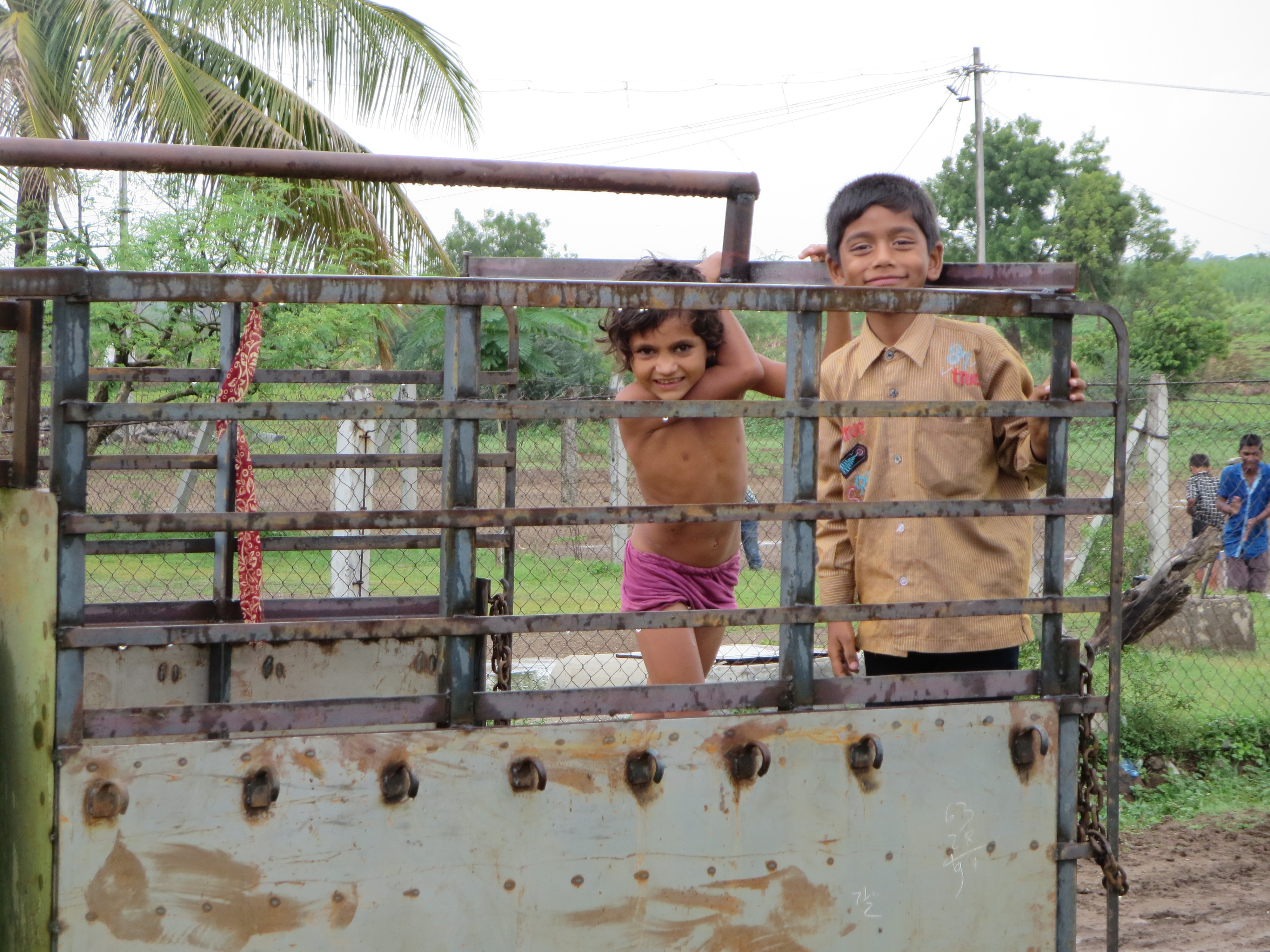
Just time for a brief hello. We have been busy first at a women’s center, the rural village schools, and then traveling with our host families out of town. My visit was a two hour journey and we were busy the entire time. My hosts were Dr. Pawar and his wife and they took us to several other schools in Daund as well as a village school. I have seen the slums in a rural area, the sugar cane fields and factory, the inside of a treasured medical facility, and so much more. Here are a few faces from the last several days.
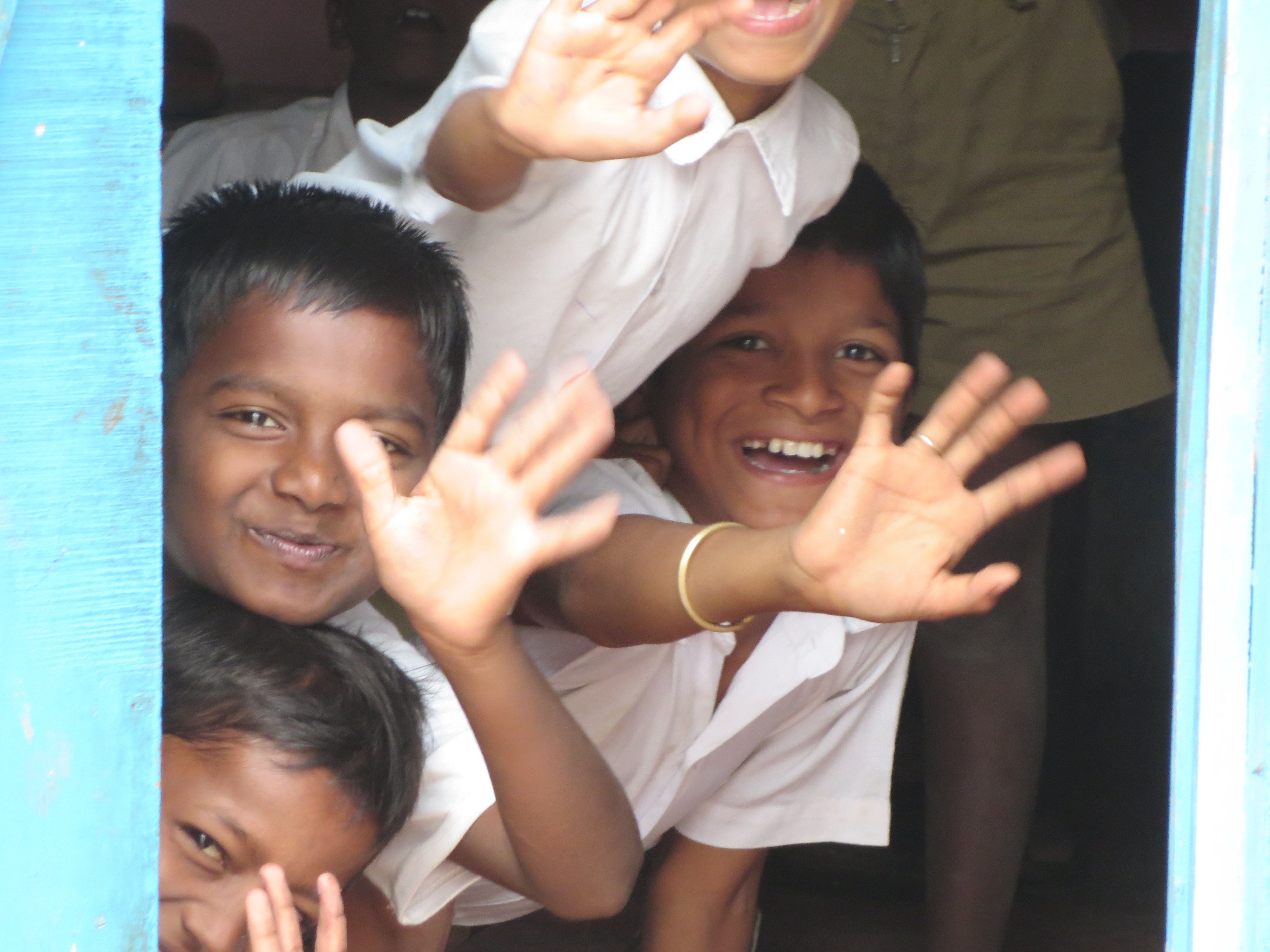
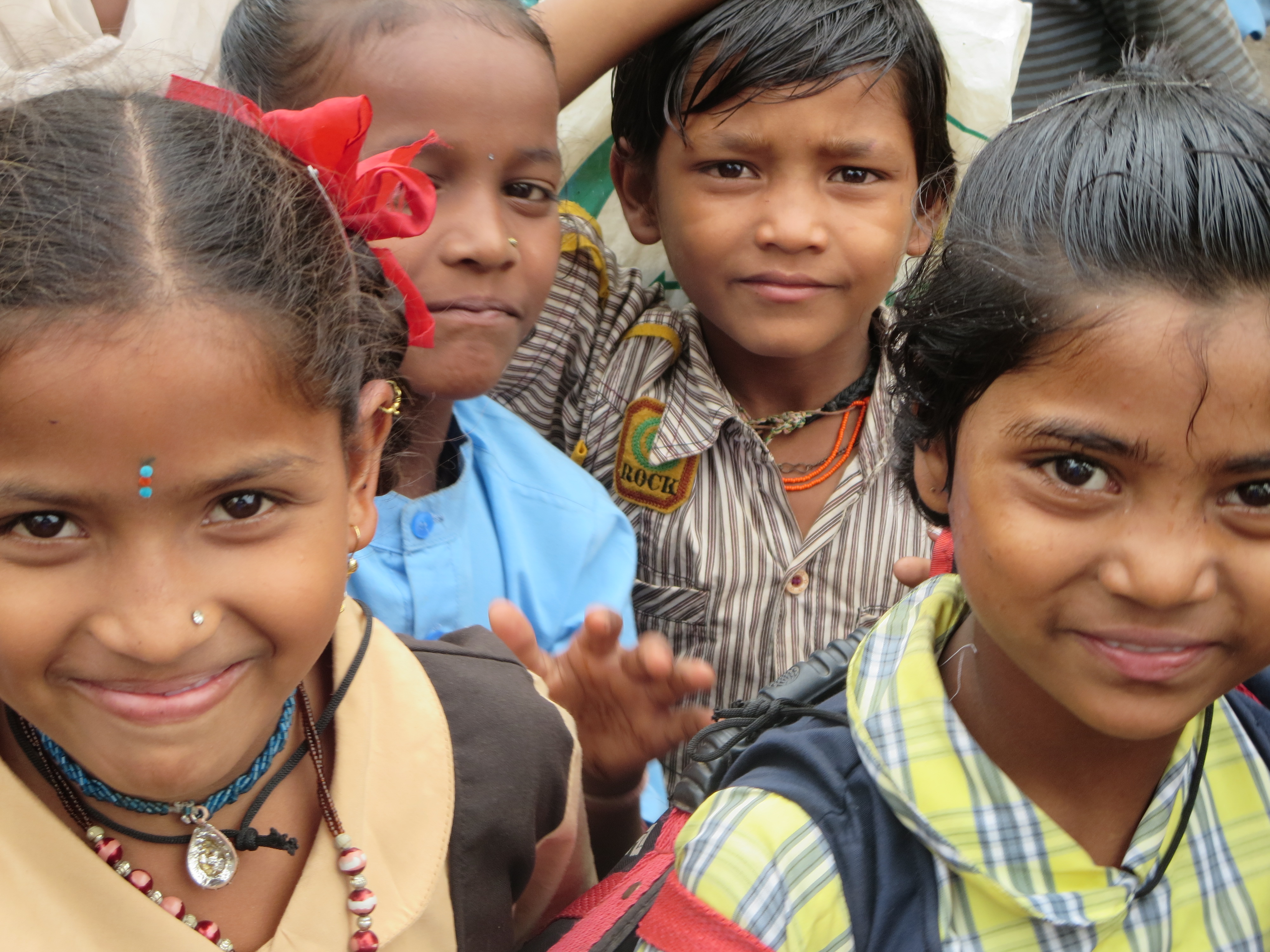
The Door Step School is an NGO (Non Government Organization that consists of three components. There are actual school buildings where children come to attend school. Then there are mobile units that go out to the construction camps where the migrant workers live in temporary settings. Then there are libraries that travel to different municipal schools on a weekly basis. They teach reading, read to children, facilitate a lending library, and they are affectionately called the book fairies. Door Step did research in the larger cities, especially those with many construction projects and they found that of the registered workers there were thousands of children, migrating to construction sites, who had no opportunity to attend school. There are many reasons for this, most of them obvious. The work that is done here is priceless; the folks who have organized this effort are saints. Their humble facilities are elegant to the children who are in attendance. I will write more on this once I have more time and Internet strength.
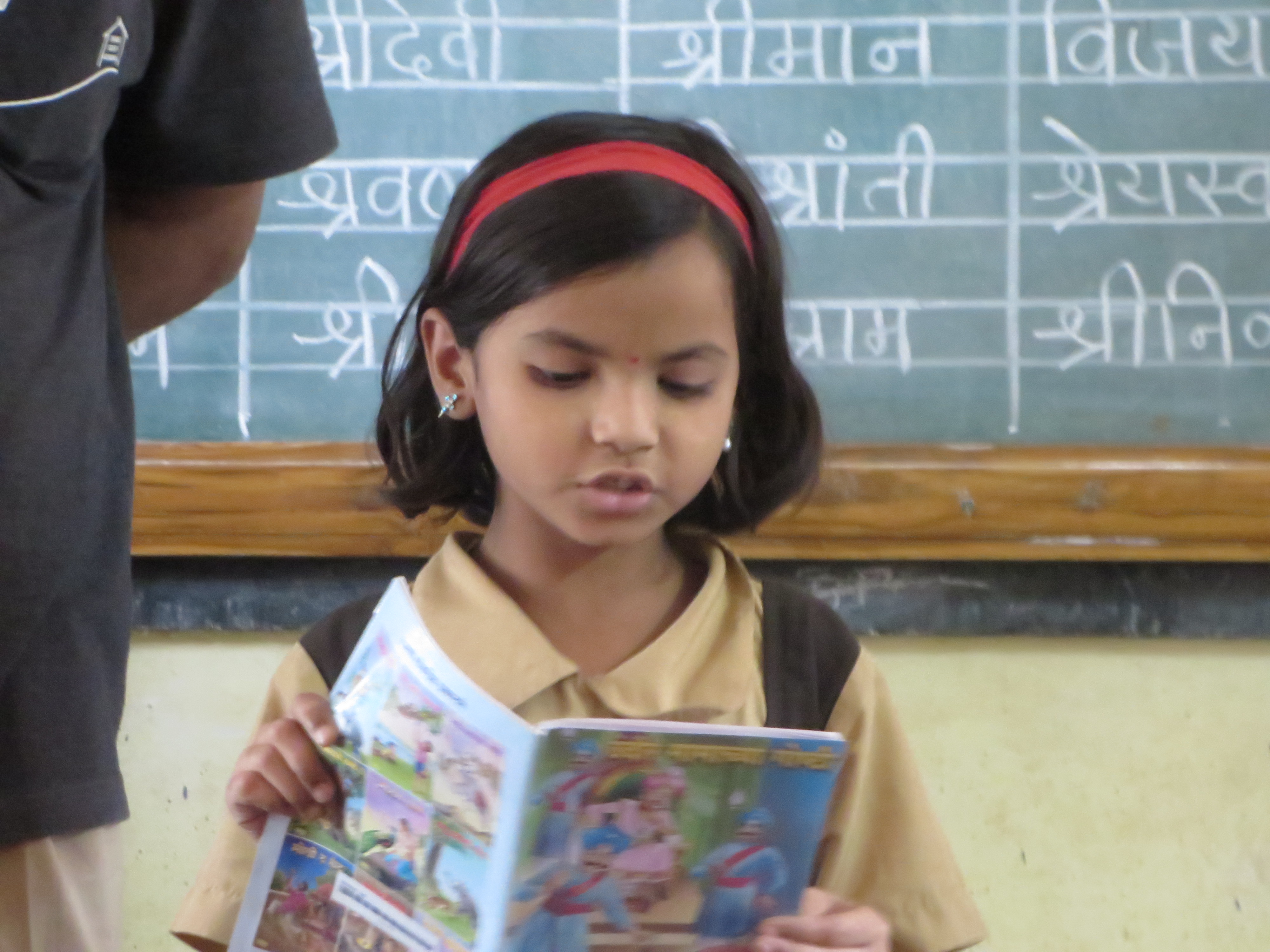
We leave in half an hour to head to the rural villages. There we will visit a women’s center, help organize a children’s field day at multiple schools, and teach a village classroom. My partners and I were up late putting the last minute touches on a lesson in English Vocabulary for the high school. We will eat at a village home, work some more in classrooms and head back to Pune where our host families will pick us up for the weekend. You should see the pictures I had from yesterday. I have many favorites. What a story there is to be told here. I do not want to view it all as a spectator and react simply for the moment. I will find a way to keep connected with these NGO’s at least one of them. We educate all children. Their eyes looking up at me remind me of my students at home.
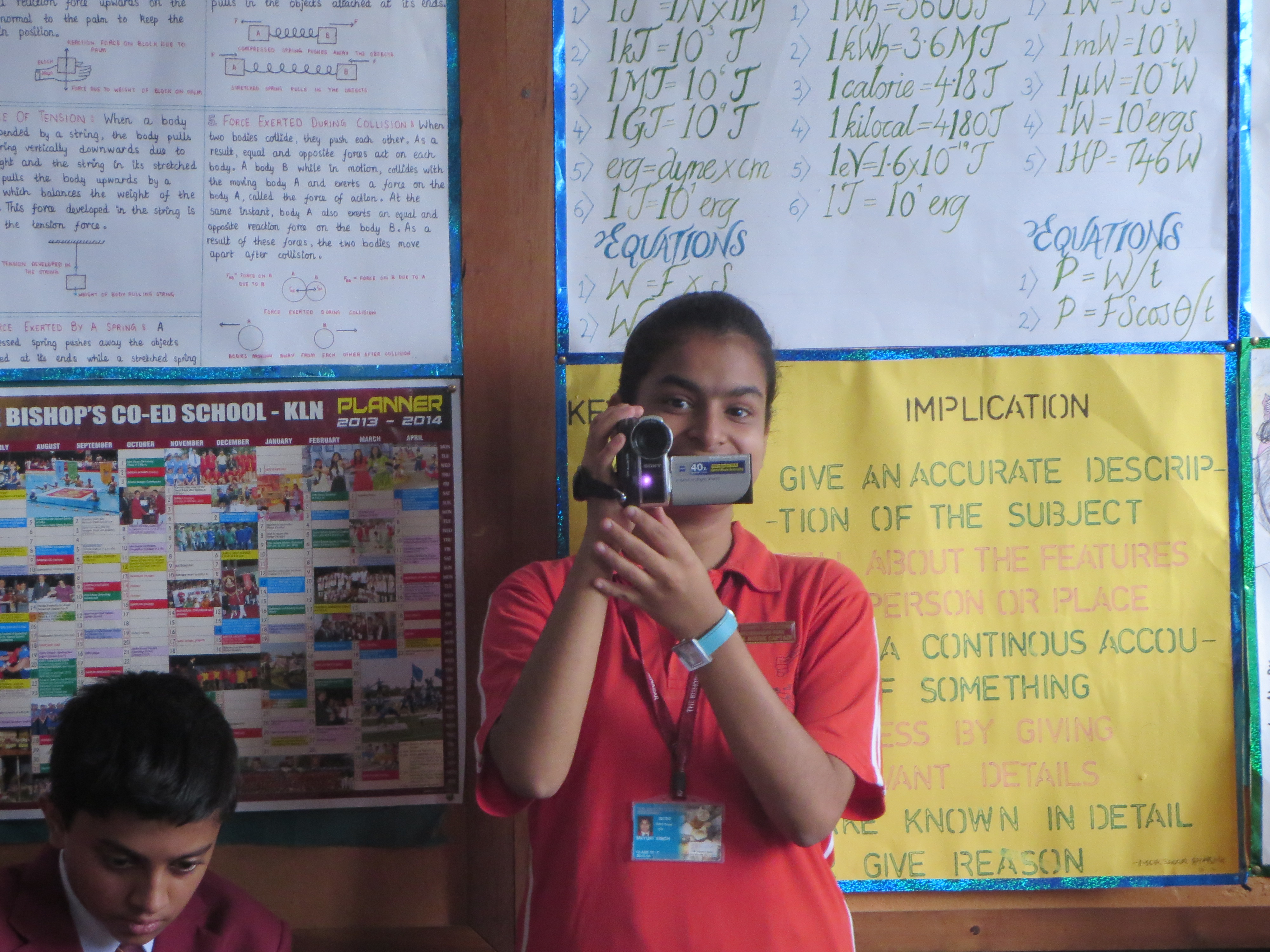
You know, it is an amazing thing to be treated as a dignitary just because you get to do the work you love in life. I mean today at The Bishop School we arrived at 7:30 am so that we could attend Assembly. Assembly happens every morning and consists of prayers, pledges, the national and school anthems, news and today an introduction of guests. Bill Worley and I have had an inspiring two days visiting the school and the respect and generosity showered on us has been truly humbling. I stood in front of a hall of over a thousand students, not the entire student body as the monsoon rains moved us indoors, and was asked to share a few words. Speaking in front of groups is not my favorite thing and to be honest, I think this might have been the largest group I have ever addressed. When words flow from your heart it makes them easy to find. Looking out at the sea of faces dispelled my normal nerves. I had seen these children in the halls, said hello and observed a lesson or two. It was easy to find the words to share my observations and hopes for their futures. Today was one for the books.
My lesson! Well, the Assistant Headmistress to the upper grades, Mrs. Gura, was going to have me come to her room sometime after 11. I thought I would have time to prepare a bit more, but the plan changed and I was moved to 9:15. Back pack and supplies in tow I marched with my lovely guide, Mayuri, up to the room where the students were already waiting for me. 48 tenth graders stood in unison to say, “Good morning, Ma’am” and well, they stayed standing. Phew, no time to unload, no time to regroup or find my ‘stuff’ all of which has been sorted and repacked in the bags I have been toting around the world. This is it. I started with distributing cards to them, little tickets that were to have their names in English and Hindi printed on them. Rifling through my bags I got out the bare essentials and began.
The lesson was taped and it also flew by. Their eyes were eager, their hands readily shooting towards the ceiling. The windows were open as they are in the entire building with no air conditioning only breezes. So my instruction harmonized with birdsong and the continuous honking of cars, trucks, and taxis. I told them I was going to talk about poetry as a jumping off point. We spoke of the difficulty in writing and I elicited the term writer’s block before moving forward. There were vocabulary words that I had to put on the board to make sure they would understand the imagery in the poem. Hmm, one half of the board was covered in foil, the other half a traditional green chalkboard of about 4’ by 4’. No well for the chalk. Another scramble uncovered a small piece of chalk not two inches in length, sitting on the desk. There was no eraser.
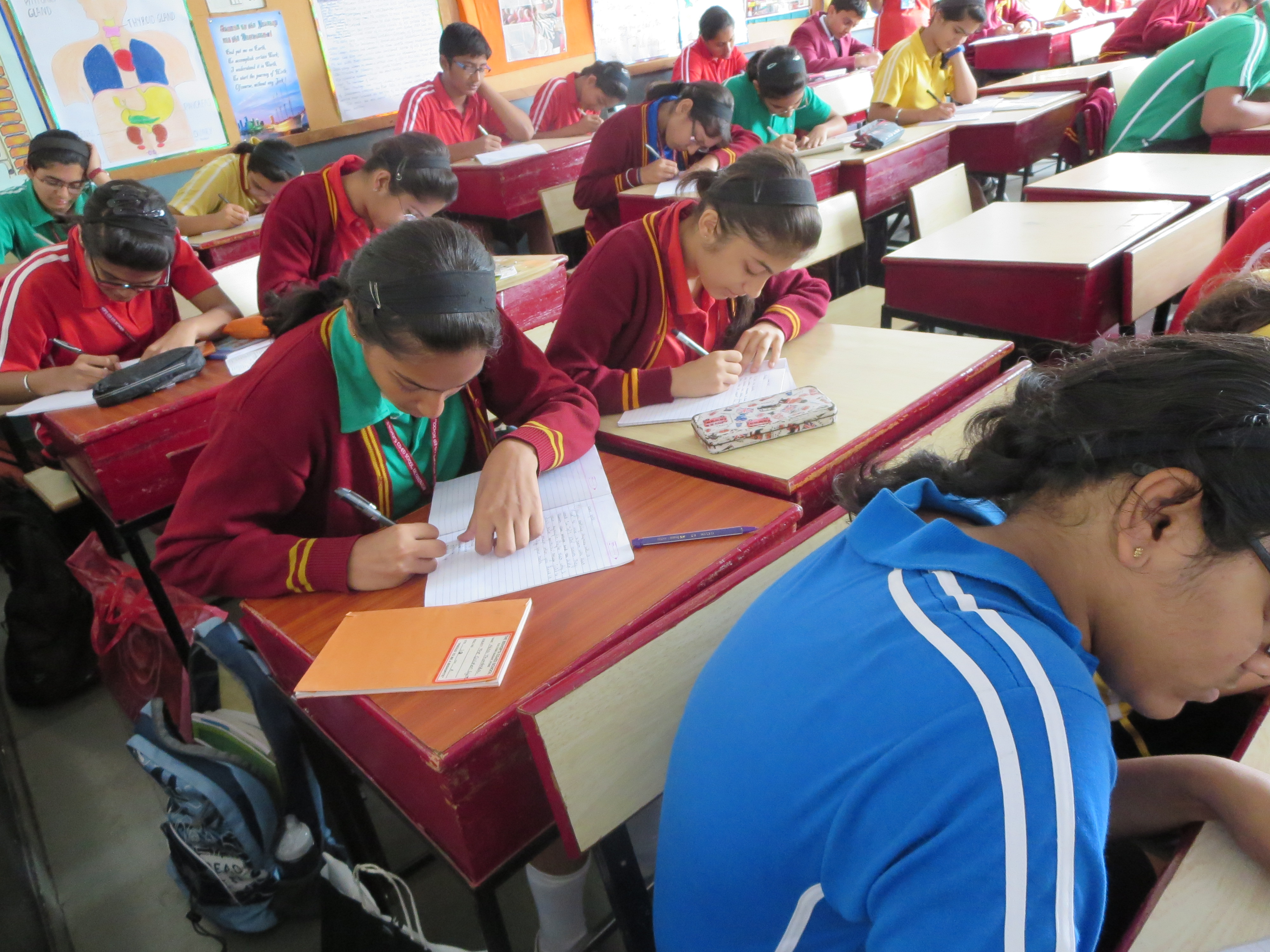
You don’t need a play-by-play here. The time flew by. The students were eager and thirsty for each step. They wrote and spilled words from their pens and pencils in rapid succession then shared their words with the group. They were delighted when I asked them to turn the cards over and write a favorite word of their own for the group. These were passed to the front, collected, and a student chose one from the pile to use for the next bit of writing. It was uncanny that the word chosen was ‘friends’. We set out to write again after I revealed the term and were still writing when the bell rang. No one stopped. We continued, the passing minutes elapses, the next teacher arrived and still they wanted to keep going. To share. To continue. I asked them to pick one word that was a favorite to say out loud. I wanted to create a verbal wave and to let them hear the similarities in their responses. It was priceless. They stood while I again repacked the backpack and spoke a chorus of “Thank you mams” I floated out of there.
I have other observations from this day. There are many differences in what these children perceive the expectation to be. They had a bit of difficulty with the idea of no rules. Their cards also contained a bubble chart with India in the middle. I have to look at these more closely before I write about them.
Great things. Thanks for reading.
(more photos coming, again, the bandwith issue)
Panorama Theme by  Themocracy

